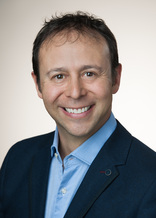
About Dana
State Licenses
Licensed Professional Counselor (LPCC)
Certified Auricular Detoxification Specialist (CADS)
Education
Masters of Arts in Religion; Yale University Divinity School
Masters of Arts in Counseling Psychology; Boston College
Training
Certificate in Trauma Studies: The Trauma Center at JRI
Internal Family Systems therapy: Center for Self-Leadership
Auricular Acupuncture Detoxification: National Acupuncture Detoxification Association
Yoga Teacher Training: Kripalu Center for Yoga and Health
Mindfulness-Based Stress Reduction (MBSR): Center for Mindfulness UMass Medical Center
Childhood Trauma and Addiction: Pia Mellody
Acupuressure and Bodywork: Thailand
Health and Fitness Instructor: National Association for Sports Medicine
Experience
Trauma Center; Boston, MA (www.traumacenter.org)
Boston Veterans Center; Boston, MA
Brattleboro Retreat Uniformed Services Program; Brattleboro VT
Harvard University; Cambridge, MA
The Meadows; Wickenburg, AZ
The Special Yoga Center; London, England
Soami Health Center; Austria
Special experience with uniformed service professionals
- Veterans and active duty military
- Police Officers
- Fire Fighters
- EMS

Extended Bio
Only the wounded physician heals. But when the doctor wears his personality like a coat of armor, he has no effect.
- Carl Jung, Memories, Dreams, Reflections, 1963
Preparation for any lifework is often multifaceted, like a rough diamond whose facets are slowly polished by what we do—and by forces that seem to come to meet us. My path has been no exception, though some of the teachers I’ve encountered, and the spiritual awakenings they’ve quickened, have been truly exceptional, including the discovery that the organic rhythm of learning how to heal is often identical to the rhythm of healing itself: concentration, then rest—breathe in, breathe out, again, and yet again.
In the beginning, I stayed only two years at the University of New Mexico because I didn’t know what I was doing, nor was I in touch with myself. I’d worked for three years as a personal trainer for the YMCA and liked the feeling of getting people into their bodies, but still had no direction. Then nineteen, I embarked on a vision quest at the Pecos Benedictine Monastery, my Catholic retreat version of Henry David Thoreau’s Walden Pond. While there, I designed Spiricize, a 60-minute, eight-week program of spirituality and exercise—already realizing at twenty that wellbeing needed to be anchored in a physical and spiritual component.
From the breathing out of the monastery, I was directed to study with Dr. Dennis Lobstein at New Mexico Highlands University who had designed a degree in Health Promotion and Wellness. For the next three years, I became a wellness consultant and worked holistically with hundreds of people, but still didn’t sense the right ratio between the physical and spiritual necessary to true healing.
Then, West met East.
In 1998, I decided to study theology at Yale Divinity School and chanced to attend a retreat in Jamaica where we practiced daily yoga. For the first time, I felt an inkling of what it might be to be whole while pursuing spiritual values through the body. Back at Yale, I googled “Yoga” and “Jesus” and came up with the 1976 book Christian Yoga by Benedictine monk J-.M. Déchanet in which he explores the spirit-body split of the West. Yoga presented a crucial praxis for wholeness and healing.
Next came the crisis that would inwardly nudge me in the direction of how trauma often roadblocks the best of physical and spiritual methods of healing. When my fiancée and I broke off our engagement, I entered a deep period of suffering that would begin to plummet the truth behind Dr. Carl Jung’s words above: Only the wounded physician heals. While consciously and unconsciously revisiting childhood traumas triggered by my present trauma, my yoga instructor kept me afloat with the spiritual nurturing of a mother and the physical discipline of a coach. To heal, I knew that I needed both.
Still at Yale, I considered applying to doctoral studies in clinical psychology but found that I preferred the creative, penetrating eyes of theologians, mystics, and poets to the categorizing eyes of psychologists vying for scientific recognition. I apprenticed with Maureen MacGuire to become a yoga teacher, then went to Kripalu Center for Yoga and Health in Lenox, Massachusetts for four months of formal yoga teacher training, staying on another three months to observe how the center operated. The day before leaving for my retreat at Kripalu, a classmate and I coordinated a conference at Yale we called “Salus@Yale: Spirituality and Health in Every Day Life.” (In Latin, salus means health and salvation.)
From 2001 to 2005 I taught yoga full-time in Cambridge and Boston at a variety of locations such as the Catholic Basilica, Harvard, MIT, law firms, and yoga studios. In 2001, I attended a retreat called “Prayer of Heart and Body,” coordinated by Tom Ryan, a Paulist priest and Kripalu yoga teacher. I co-founded christianspracticingyoga.org.
In 2003, I studied Thai acupressure bodywork in Thailand, after which I breathed out for five months, stepping back to take another look at my diamond. Academia beckoned and I enrolled in a joint Master’s program in psychology and theology at Boston College, finishing only the psychology degree. Simultaneous with the program, I trained in Mindfulness Based Stress Reduction (MBSR) at the Center for Mindfulness at the University of Massachusetts Medical Center, Worcester—a program begun in 1979 by John Kabat-Zinn, an expert in mindfulness intervention.
Then another turning point inserted itself, beginning with questioning the MBSR standards for admission that screened out post-traumatic stress disorder (PTSD) sufferers because of the triggering mechanism implicit in the disorder. During a lecture on PTSD, I suddenly put together two insights: that trauma is about not being in the body and not being present, and Kripalu yoga is about being in the body and being present. Could Kripalu yoga be an antidote to the dissociative processes of trauma? In her 1997 book Trauma and Recovery: The Aftermath of Violence—From Domestic Abuse to Political Terror, Judith Herman says that to understand trauma, you must think like a theologian, a philosopher, and a jurist. My background exactly.
I googled “Yoga” and “PTSD” and came up with Bessel van der Kolk, MD, founder of the Trauma Center in Boston—a world leader in PTSD and how yoga contributes to trauma recovery. While on faculty at the Trauma Center’s Professional Training Institute in 2007, I co-created the yoga program while interning at the Boston Vet Center and applying MBSR mindfulness to combat veterans with PTSD. Van der Kolk and I still co-teach courses throughout the year at the Kripalu Center for Yoga and Health and the Esalen Institute in Big Sur, CA.
In 2008, I studied how to use auricular acupuncture in trauma treatment at The Meadows in Arizona, then was hired by The Meadows to design a trauma-informed mindfulness program. The Brattleboro Retreat, a private psychiatric hospital in Vermont, then asked me to design a trauma-informed mindfulness dimension for their Uniform Services Program, a two-week partial hospitalization program for uniformed service professionals (police, fire, military).
In 2009, I participated in a 5-day think tank organized by Jack Kornfield, a leading meditation teacher and psychotherapist. Leaders in their respective fields including Jon Kabat-Zinn, Daniel Seigel, and Bessel van der Kolk, were there to brainstorm how to teach mindfulness to trauma survivors.
In 2010, I moved to Santa Fe to begin JourneyWell, a trauma-focused psychotherapy practice that will eventually include an interdisciplinary team serving individual and group therapy as well as professional training.
Needless to say, my rough diamond continues to be polished by the remarkable people I encounter. Like many in the healing profession, my life began in trauma and I was led to return to trauma, but no longer as its victim. Full circle—what life has in mind for all who have suffered trauma.